Willing to Be a Beginner
The kids have been learning how to learn a new language.
As I sat down on a swivel chair in front of the mirror and the lady wrapped the apron over me, I struggled to find the descriptive words that I was looking for. Perhaps not the best time to decide that a full re-style was in order, to go from long hair to a style nestled at my jawline, but Pinterest had lured me in once again and being the first cut for a while, I wanted to get my money’s worth. As I glanced up at the mirror, I caught a glimpse of the kids crammed together in a chair behind me, both struggling to contain fits of giggles. Every event these days is a family affair. Clearly Jimmy, in the seat next to me, was faring no better. I think I managed “corto” (short), remembering the association with a cortado coffee, as well as “lavar” (wash) and “cortar” (cut), before bringing up the saved photo on my phone and resorting to miming what I wanted.
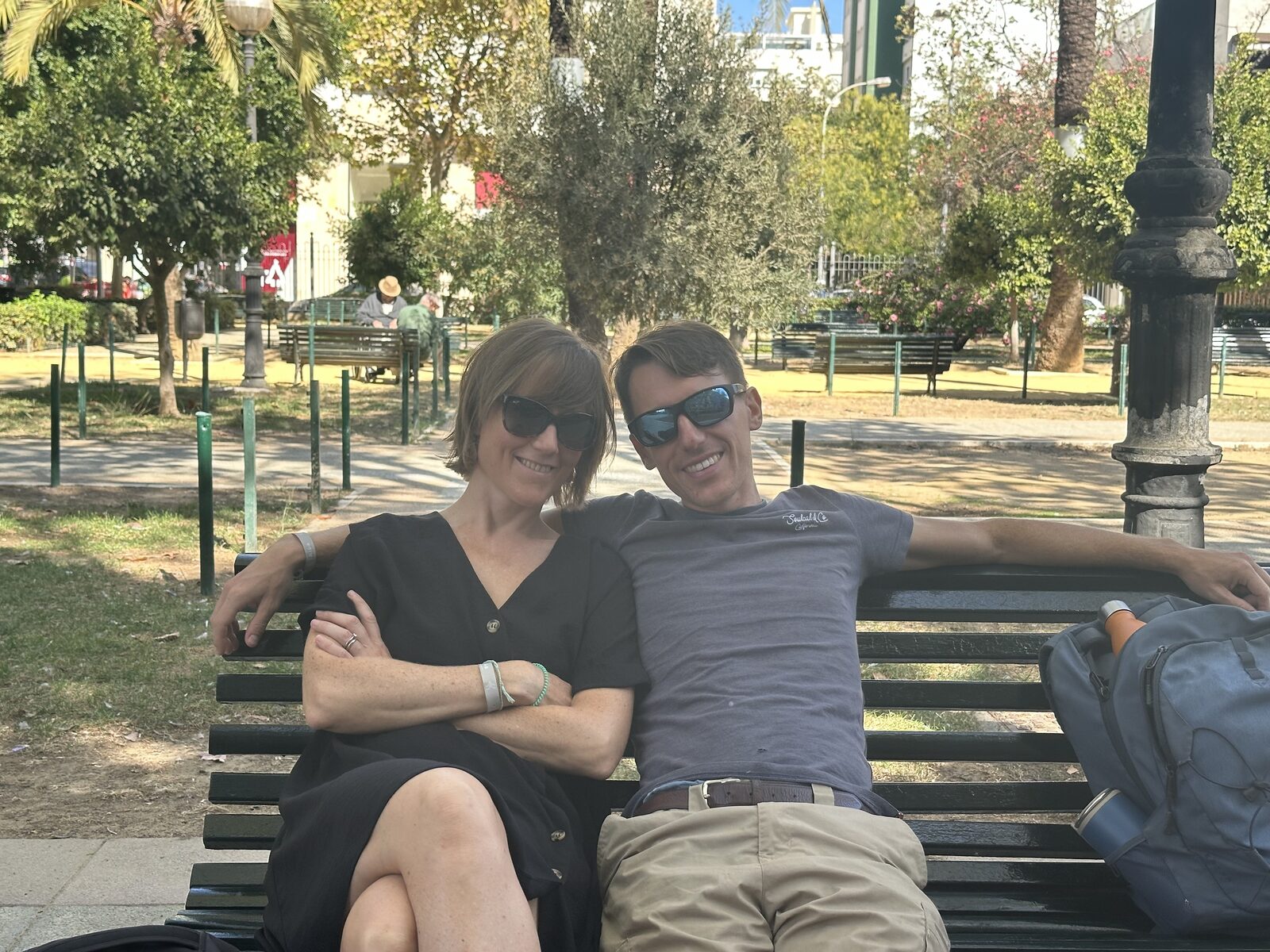
I walked out of that salon in Cádiz pleased with my new hairdo, but ashamed of my appalling ability to communicate in any language other than my own. I had shown the kids that I was willing to be a beginner and at least give it a try, but I desperately wanted to be a better example for them. I wanted them to understand that just because English is widely spoken across the world, we shouldn’t be lazy and fall back on that as an excuse not to at least have a go.
I passed GCSE French at school with an A grade, over 20 years ago. That grade was definitely achieved through a far better ability to read and write French than speak it, aided by my Dad (who studied both French and German at university) correcting my homework. In a class of 28 students, it was impossible to get the time to converse in French to an ability that was useful. So I left school with a useless piece of paper speaking of my apparent competence, but in reality all it enabled me to do was buy a train ticket at the station (which with e-tickets is now useless), or order a croissant with my coffee for breakfast (definitely not useless). Beyond that, I quickly falter.
But that has never stopped me fantasising about communicating in European languages that sound far more passionate and expressive than my own. I would watch Rachel Khoo in my twenties, pushing her bicycle through the Parisian market as she bought delicious produce to take back to her tiny kitchen, and imagine myself living such a life. I even spent a summer after college working in French campsites in the Vendée with the hope of improving my spoken French, but the reality was that I spent all of my time with English colleagues and customers, where there was no need to converse in French.
This has proven to be the case with the kids on the road too. Unless there is a need, and someone to converse with, it seems it is very difficult to turn basic vocabulary into a spoken language. We spent 3 months living in Malaysia and, shamefully, barely learned any Malay. The locals in Penang were so proficient in English, and so keen to engage with us in our own language, that we were never really forced to try, whereas when travelling in more rural parts of Thailand, where English is less widely spoken, we were pushed out of our comfort zone into picking up basic phrases to get by.

We opted to encourage foreign languages from early on in our home educating journey, because we both felt it would give another means by which to improve the kids’ verbal and written communication skills in general. It also suited our choice to travel, where learning the local language became a necessary life skill rather than another subject just tagged on for the sake of it. We wanted the kids to be able to play with other children in the park, and engage with the world around them through the language being spoken by locals.
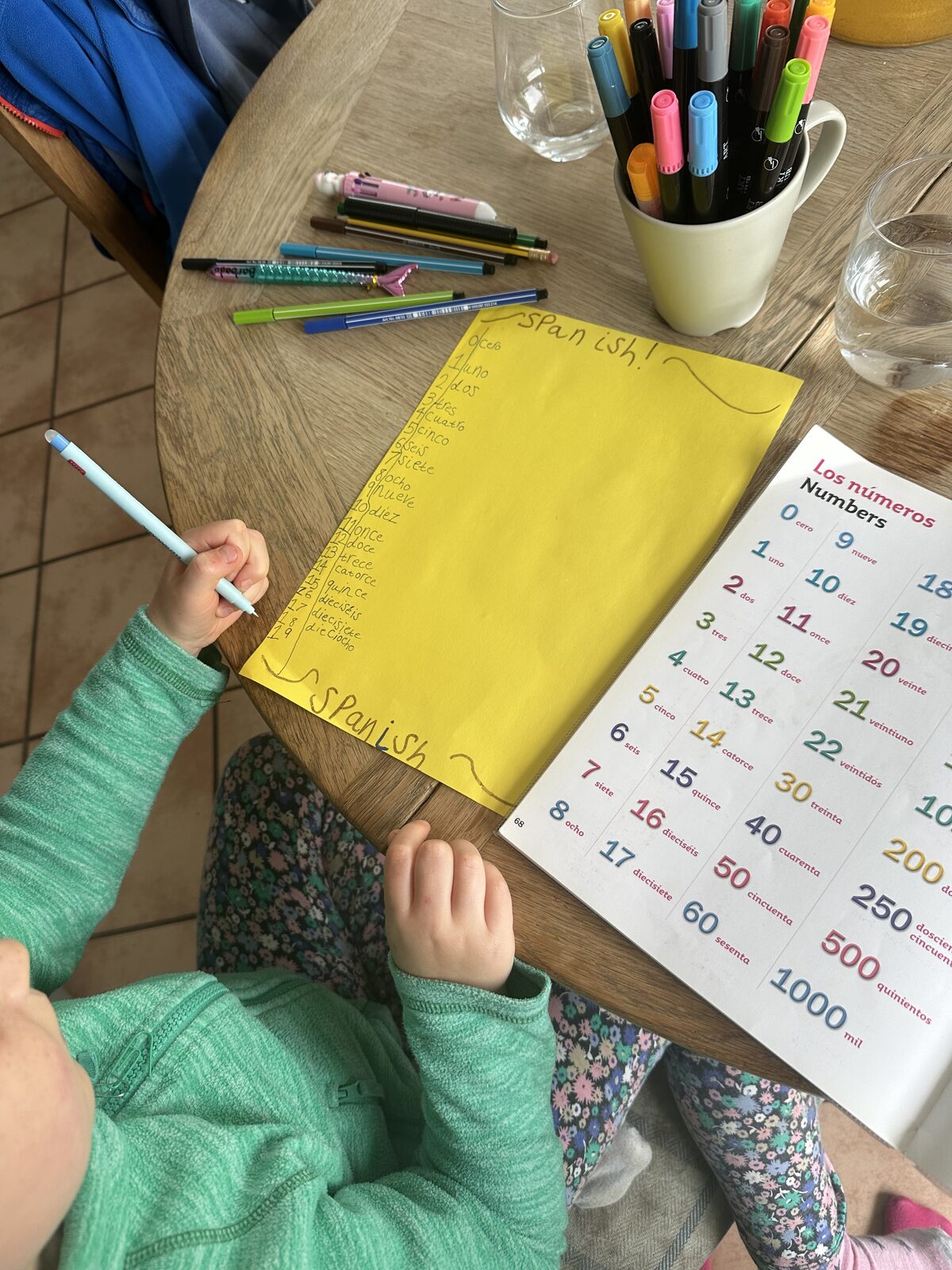
We took in-person Spanish classes with an enthusiastic South American before leaving for Spain. As we all sat around the dining table, repeating Spanish pleasantries back to Andrea in turn, I realised that we all had different learning styles and paces, and group lessons just weren’t going to work. I like to see words written down, it helps me to make sense of them and commit them to memory, and I struggled with the fast pace of the teaching. Jimmy, who seems to have a natural ability for languages, can just hear a word and quickly repeat it back. He thrived with this method. The kids struggled to keep up: our 4-year-old son was too intimidated by the unusual setting to take in the learning, and our 7-year-old daughter was keen but needed much more repetition. So when we left for Spain we had some basic numbers and phrases but not enough to get us out of a bind. We stopped the lessons and delved into the world of Duolingo.
A trip to the campsite toilets in Europe was rarely completed without the fanfare of a completed lesson coming out from behind a cubicle door, which quickly told me how they came to have over 50 million daily users1. For a family who try to keep screen time to a minimum, it was a difficult choice to use this platform and the addictive nature of the gamified app left me in a quandary. But we were keen to embrace the language of the country where we had taken temporary residency and without the budget for more in-person lessons, a small dose of Duolingo each day felt worth the risk.
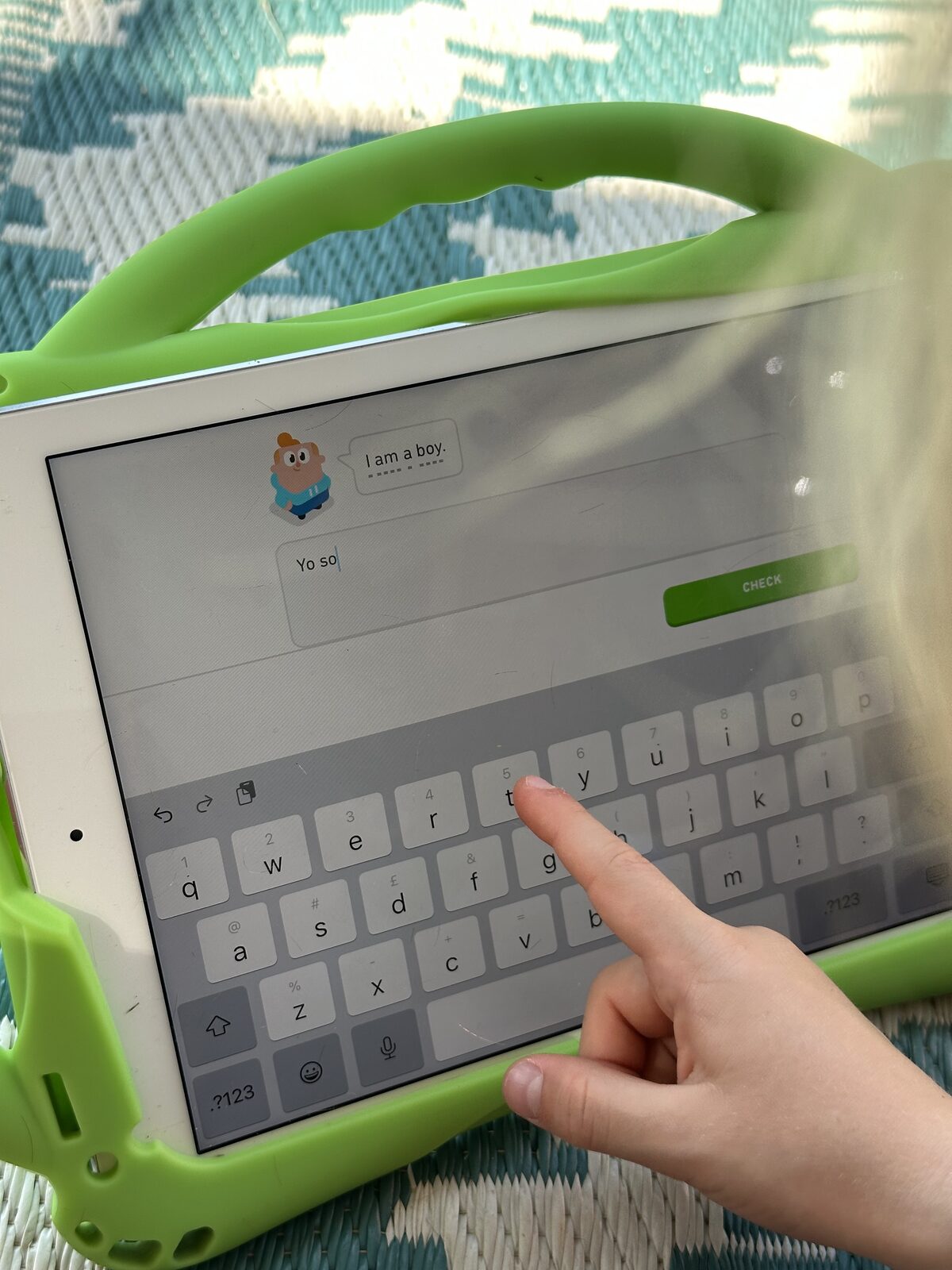
Through using the app for 10 minutes per day, our son improved his reading and writing, talking and listening not only in Spanish, but also in English. It was clear that regular, independent use of the app was inadvertently improving our children’s communication skills in both their own language and the new one. It requires listening to audio, reading the text and typing the correct answer, as well as sometimes speaking the answer aloud. They were engaged in the idea of using it because it was fun, and motivated to practise because they could see the importance of being able to speak to people when we were out.
The day that our son opted to go into the campsite shop alone and purchase two baguettes using the Spanish phrases he had learned, was a day that I knew his learning had surpassed that of my GCSE French. He may not have had the full vocabulary I knew, or an understanding of tenses, but he had the confidence to try and enough phrases to be understood. He came out proudly brandishing his bounty, having not let the fear of looking silly hold him back, happy to have achieved his goal.
To complement their Duolingo, the kids have since started twice-weekly Zoom classes with a Spanish tutor that we found through a friend. An added expense for us but the constancy in the kids’ lives in seeing another adult, no matter where we happen to be in the world, has been a bonus. Having the time in 1:1 sessions to practise talking out loud with a familiar face has taken the vocabulary learned through Duolingo and given them a platform in which to speak.
At their young age, they seem to possess a natural ability to really hear and mimic, an innate skill they relied heavily upon when learning to speak English as babies. An ability we seem to lose all too readily as adults, unless practised. I marvel at the kids’ accents and pronunciation when I hear them practising, jealous of the ease with which they can roll their r’s (a sound not required for speaking English).
As we left Spain and moved to new countries, the languages changed but our approach to learning stayed the same. The tools, be it Duolingo, an online tutor, workbooks or “Coffee Break” podcasts, allowed the honing of the same skills and behaviours but in different languages. The kids have been learning how to learn a new language, which feels as important as being competent in the language itself. They have strengthened their listening, their memory, their recall as well as their confidence, decoding and communication (verbal and non-verbal). They have dabbled in French, Spanish, Italian, Arabic, Thai and Bahasa Indonesia. They only know a small amount of each, some only a few words, but each time they start a new one the process feels more natural.
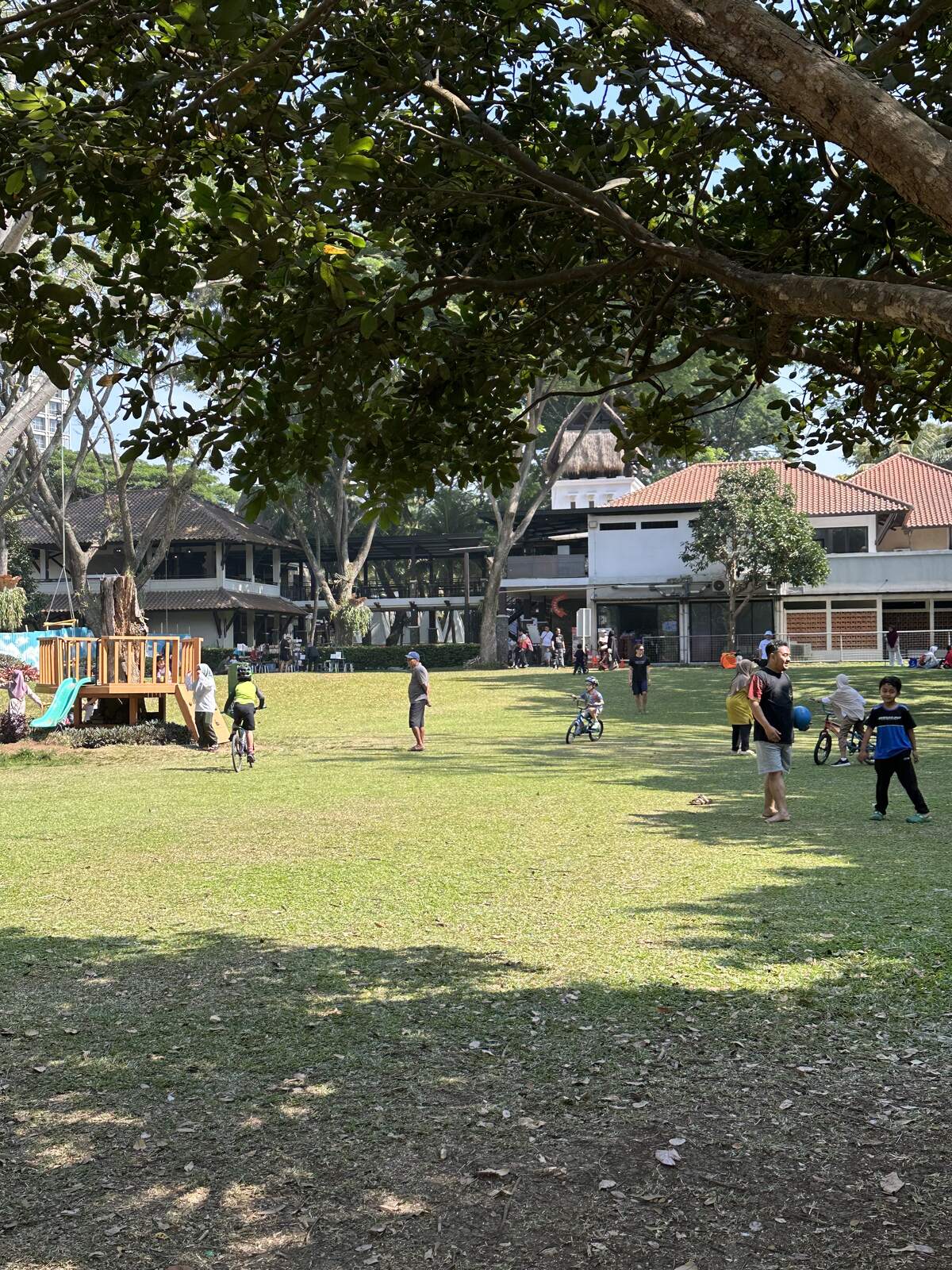
In the few weeks we spent in Indonesia last month, our daughter completed several Duolingo lessons of Bahasa, and then used this to greet other children at the community playground, and ask them what their name was. The invitation to switch to Bahasa was given by us on arrival in Indonesia, but the motivation to take that forward was hers. She wanted to learn so that she could speak to others, something she loves to do. She was also curious about the language that used the same Roman alphabet as English, and looked very familiar when written down due to its similarities to Malay.
It is always the small everyday interactions with the taxi drivers, or the market stall holders, that turn an inconsequential moment into something that stays with us. The more we travel and the more the kids watch Jimmy and me try (and often fail) to navigate the world in new places and new languages, the more they join the dots. They can see the necessity of language, and the beauty in the interactions that come from just having a go.
I don’t think I will ever be a master linguist, but this journey we are taking together with our kids has encouraged me to try harder for them. We are on rocky ground as parents if we ask our kids to do something that we do not do ourselves, and so I continue to try to push myself out of my own comfort zone, as in the hairdresser’s, in order to keep learning how to learn along with them.
Daily active users figure from Duolingo’s third-quarter 2025 results, published 5 November 2025 (investors.duolingo.com).
A letter on Sundays
A short letter from wherever we have landed: what we've been learning, what helped, and what I'm still working out.
If you would enjoy receiving a letter from me, I would love you to join me.