Fall Behind What?
Teaching our son to read, with no one watching us
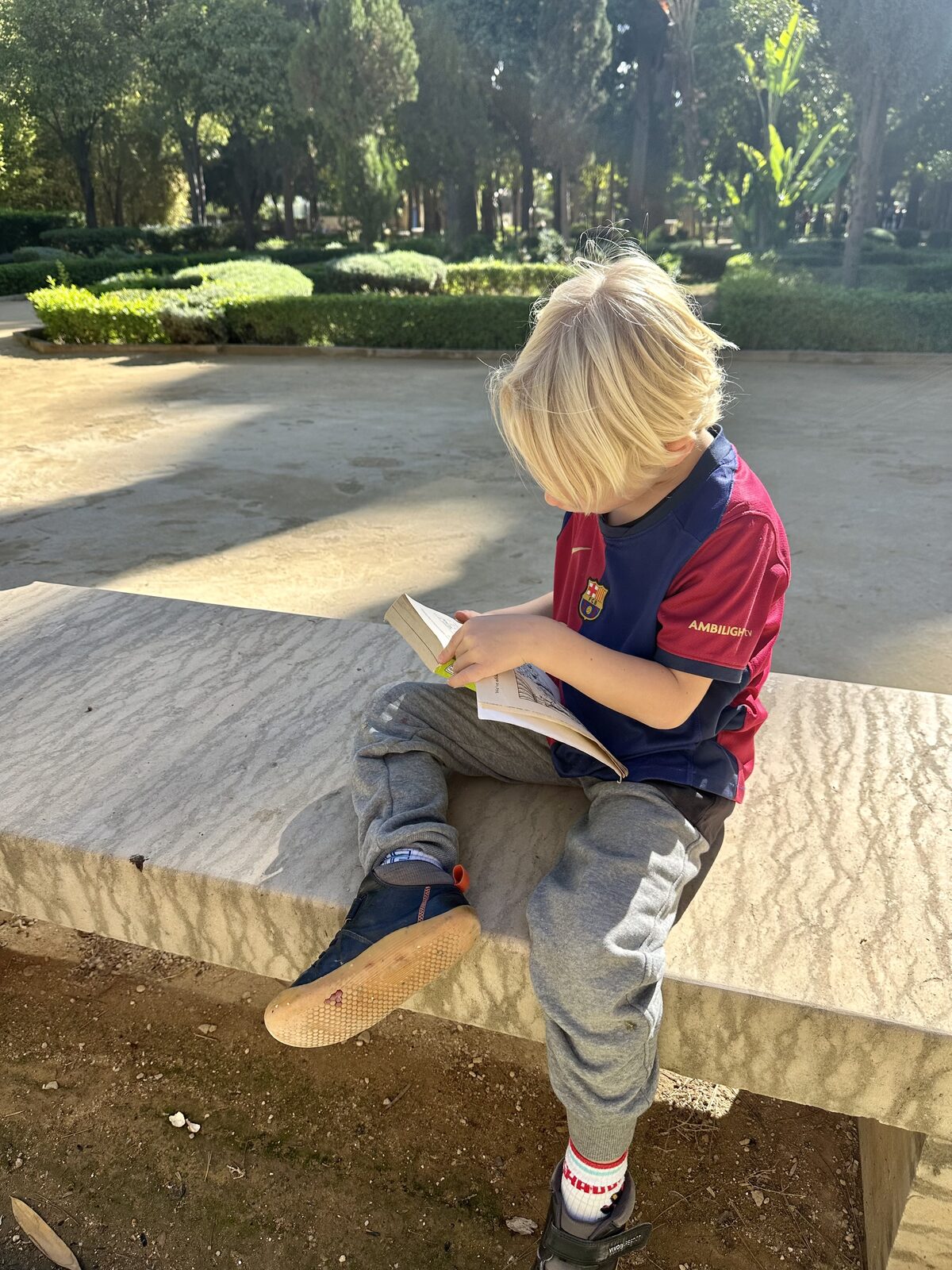
My five-year-old beamed at me across the table as he told me what he had chosen from the menu. A beef and prune bastilla was a more adventurous choice than normal for him, possibly because he had had the time to decipher the words and absorb their meaning for himself. This was a first for him, and easily overlooked. But as he sat in the restaurant in Marrakesh and read every dish on the menu along with its accompanying description, and made his choice, I couldn’t help but reflect the pride that was showing on his face. It was the moment that all of those hard hours of decoding, sound blending and vocabulary building had been working towards. He had applied it out in the real world, in a way that was meaningful to him, and best of all he knew it.
As a home-educating parent who has taken full ownership of his learning, I felt my whole body relax a little. Unlike my daughter, who had learned to read and write at school, leaving the schooling system at the end of the winter term of Year 2, my son had only experienced two terms of pre-school and so had not yet started. The full responsibility of teaching him to read and write fell solely on Jimmy’s shoulders and mine. Having started this journey with him only a few months before his fourth birthday, and shared every moment of it with him, I felt especially moved by these small wins. The work was all him. I cannot take any of that credit away and would not wish to, but it had been a big learning curve for me too.
It is a long time since I learned to read, when the charismatic figures of Annie Apple and Bouncing Ben were there to show me the way. I do not remember how I got from recognising the shapes and sounds of the Letterland characters to spotting full words. In my memory, one day I was reciting the alphabet, the next I was reading storybooks. I have obviously blanked out all of the hard work in between.
My daughter learned using the Read Write Inc. method that was followed at her school - the system of breaking down words into individual letter sounds (phonics) that can be taught and memorised, so that these sounds can then be blended together to decode words. As a school parent I felt pressure to learn the “correct method” so that we could coach my daughter at home. We used flashcards, we memorised red words (the ones that slip outside the rules, of which there are plenty) and we took the time to listen to her read so we could log the required number of reading minutes per night. Even when my daughter was too tired from her school day, I felt pressurised to open another book with her so we could meet the benchmark. It felt like the method, and the importance of following the correct formula, had overtaken the joy of the journey itself. Learning to read had been broken down into steps and standardised into tick-boxes to be achieved along the way.
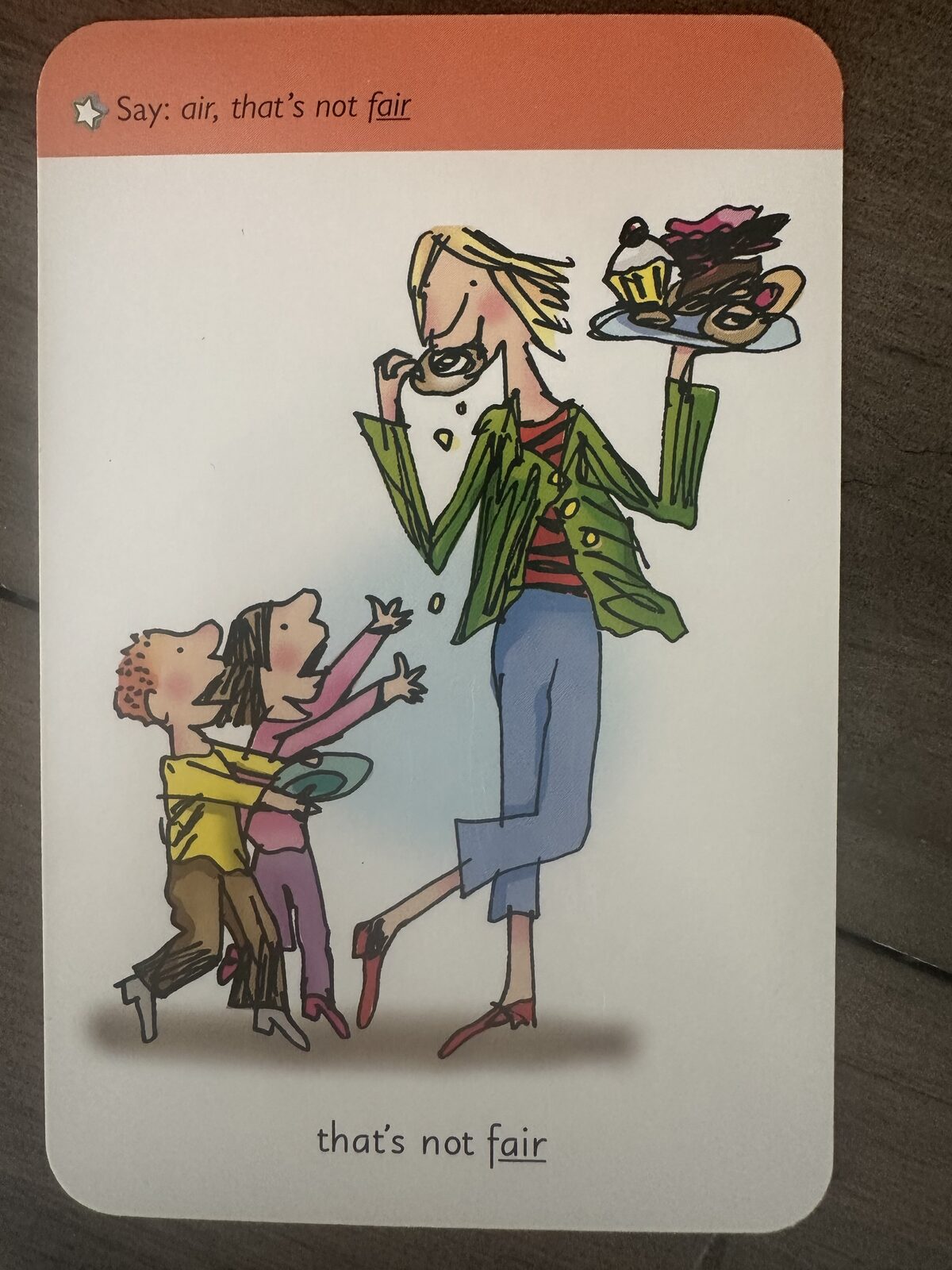
This process, in which Jimmy and I were now versed, did give us the confidence to start teaching our son. We had the Read Write Inc. flashcards, we had some of the videos, “alien words” were not so alien to us, and so when he showed an interest in learning what his big sister could do, we jumped straight in with what we knew. We mimicked what we had gleaned from the school process, each day introducing a new phonics sound, asking my son to repeat it and the accompanying rhyme over and over. The new flashcard would then take pride of place on the fridge, next to all of the others. “That’s not fair”, the rhyme for the Set 2 sound “air”, quickly became a family favourite, being my son’s most-used phrase at the time!
His big sister, now further ahead in her reading and more familiar with the method she had been schooled in, took the opportunity to encourage her brother and celebrate his achievements. It boosted her confidence when I would refer to her for a reminder of the phonics rhymes when I had forgotten. It warmed my heart when they would play a game together, the seven-year-old testing the four-year-old, seeing their smiley faces and claps when he got it right.
I am not sure how things would have played out if we hadn’t had the coaching with my daughter, or if my son hadn’t been so willing to start. I do know that when we began we were still conditioned by school over the need to get the method right, but also felt under added pressure to not fail him, suddenly feeling very alone in our lack of support. I felt I understood the process of learning to read, but I had been unprepared for the rollercoaster ride of emotions, the starts and stops, and the erratic pace that would follow over the next two years.
The first weeks seemed to flow with lots of enthusiasm, and he was always eager to learn, demanding to add more and more sounds to his repertoire. We would be out in the car and he would shout out a letter that he had spotted on the side of a lorry, or on a signpost. Suddenly the indecipherable marks were becoming accessible to him, opening up a part of the world that he wanted more of. Sound blending simple three-letter words also seemed to come easily. But when we progressed to books, his enthusiasm slowed, as it had for my daughter. It seems the “Learn to read” books follow a tested method for slowly introducing and reinforcing sounds, which is successful, but in my experience of reading them with both of my children, the content does not make a quick page-turner. The story quickly falls short when the game is to see how many of the chosen sound can be fitted into one story, and with it falls any motivation to read it.
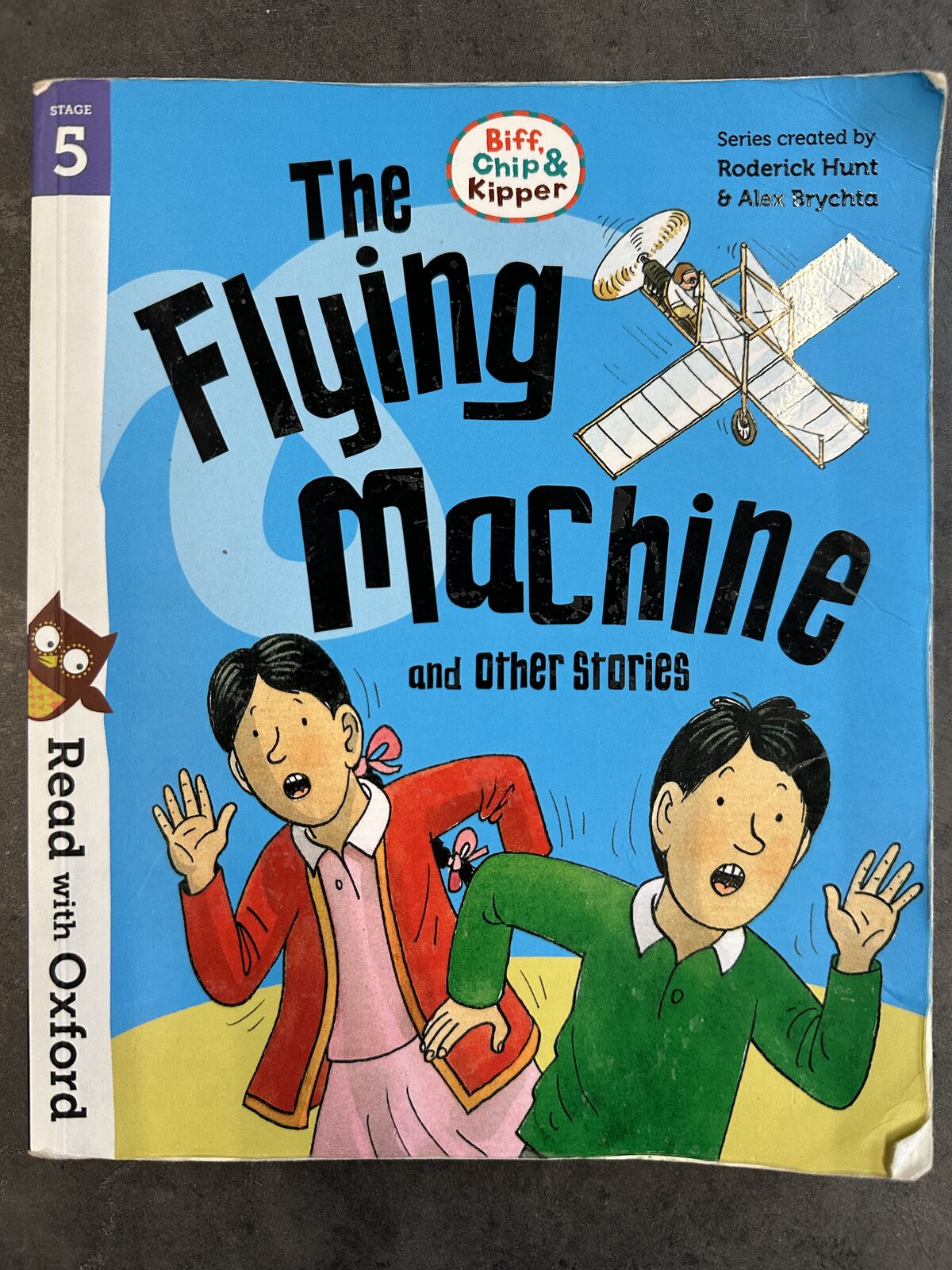
And this is where we jumped off-piste. With no one watching us, I grew in confidence in letting my son guide the way and choose the pace. The lack of access to consistent resources also meant that we were not able to follow a seamless flow of books growing in progressive difficulty. We found some of the Read Write Inc. series second-hand on eBay, but there was often a mixture of stages in the bundle, so the books didn’t always match where we had got to with the flashcards. We also got what we could from the library, or full price from the local bookshop. It was when trying to access the books that I realised that there are other methods of learning to read, beyond what we knew. And it started to become irrelevant what “method” we followed, so long as our son was engaged in the process and excited by the books he was reading. The “Read with Oxford” series following the adventures of Biff, Chip and Kipper, characters I also remember from my childhood, was a clear favourite, likely because the illustrations were appealing.
When the pace was too quick, a story didn’t engage him, or frankly he just wasn’t in the mood, he would refuse to read to us. This could sometimes be just a day, other times a week, before he would come back to it on his own terms. I had to quieten the voice in my head that worried that I wasn’t doing enough, I was doing something wrong, or that he would “fall behind”. Fall behind what or who, I am not quite sure. But when I stepped back, I could see that during these times he never stopped wanting to be read to, or devouring his audiobooks on his Yoto. He was constantly being exposed to words, whether spoken, read or written, and he was slowly progressing along the route of competency in his own way. His vocabulary was increasing and his comprehension in line with it, and both of these things only made it easier when he had the curiosity again to return to the decoding.
As he developed and his attention span and imagination increased, we found that we could leave the “Learn to read” books behind and dive into the world of chapter books. He was keen, as always wanting to keep up with his sister and inspired by the more interesting books that she was reading. To make them more accessible we would all take turns, him reading aloud a few sentences or a paragraph to begin with, then his sister and us picking up when he grew tired. It often felt like the most calm and enjoyable part of the day in the van, snuggling up on the bed and sharing tales of courageous animals like The Hodgeheg or The Sheep-Pig. Those beautiful stories really pushed him forwards, but he was so invested in the characters that he didn’t notice.
The Treehouse series is where he really found his reading flow, gaining in confidence and fluency with every floor that was added. The kids would eagerly climb into the camper van pop-top to share the ridiculous stories with Jimmy. They would be in fits of giggles at the outrageousness and would beg to be read more. He went from being a passive listener in book one to taking it in turns to read by book two.
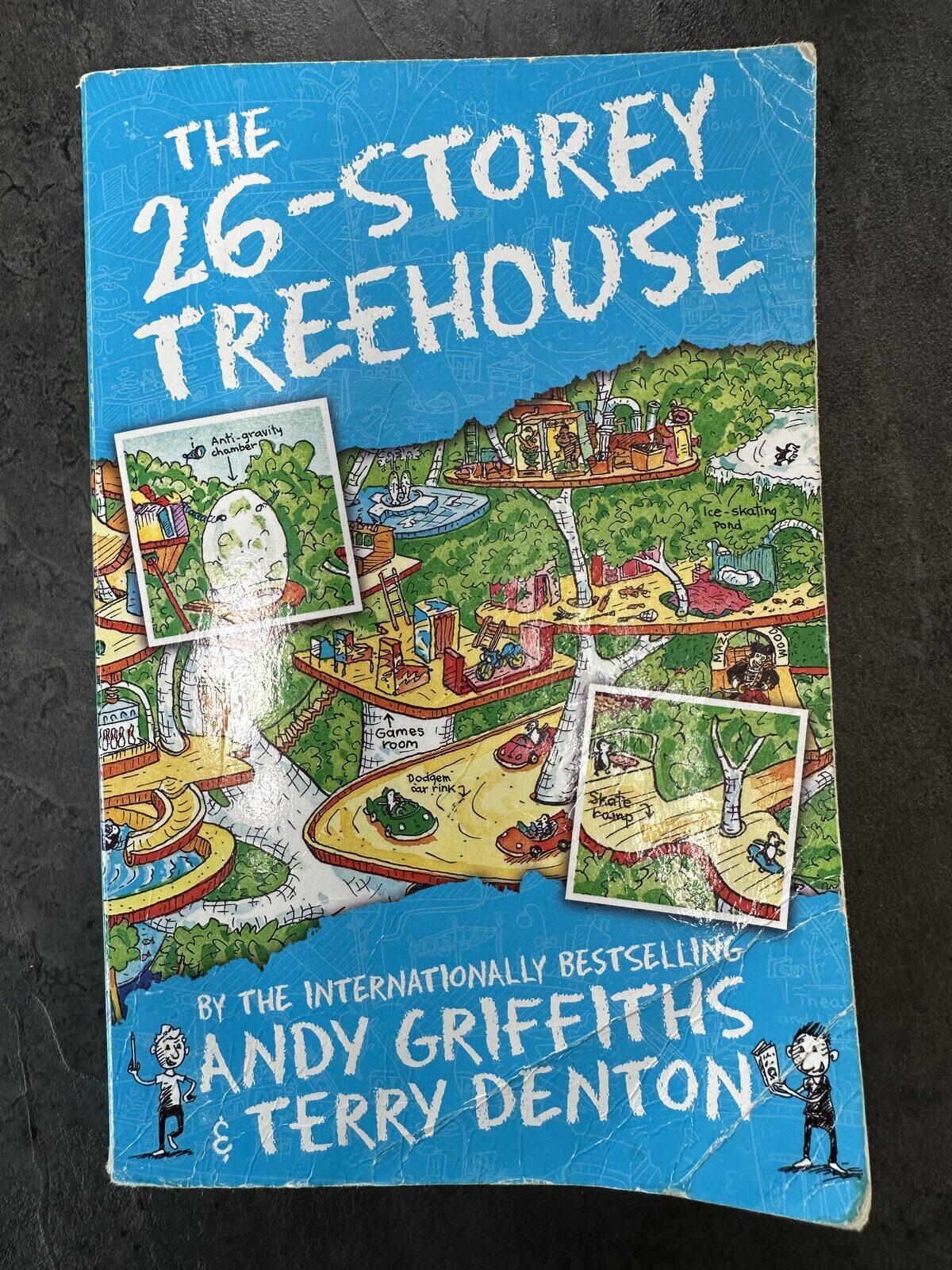
As I looked at my son reading the menu I realised that it was perhaps not such a coincidence that he chose that moment to do this. The day before, as we sat relaxing on the rooftop of our riad, he had chosen to pick up The 78-Storey Treehouse (the sixth book in the series) and read it to himself for the first time, unprompted. As it often does in the learning process, it felt like something had slotted into place for him. It had become second nature to take the reading skills he had developed and apply them when needed.
From the first days of excitedly pointing out the letter “s” that he had just spotted on the side of a lorry as it drove past, to laughing and telling me what the sign on the back of the toilet door had said, the world around him has always provided both the practice arena and the purpose.
A letter on Sundays
A short letter from wherever we have landed: what we've been learning, what helped, and what I'm still working out.
If you would enjoy receiving a letter from me, I would love you to join me.