Before Reading the Textbook Answer
Not every day in our home ed life looks like the idealistic picture of our children wandering the halls of great art galleries.

We sat on the wooden floor together, in the cavernous room surrounded by marble statues, grandiose chandeliers and floor to ceiling oil paintings, and took the time to just look. My daughter, nine years old, had been drawn to this image of a woman with her elegant gown beautifully captured through the detail of the brush strokes, as well as the raw emotion on her face that enraptured us from across the room. Before reading the caption, I wanted her to use the clues in the painting to work out where it was set. Her best guess was Ancient Egypt, from what looked like hieroglyphics on the wall behind the woman, and the carvings of spear-holding men, which reminded her of the statues of Anubis from the film ‘Night at the Museum’. She felt this also matched the style of jewellery being worn by the lady, whom she decided must be someone important because she was being helped to dress by two other women.
Queen Esther, from the Old Testament, was queen of Persia - not Egypt. We read the caption afterwards and discussed how old Persia once lay where modern day Iran now is, but the point of the exercise was not to get the answer correct. It was to have fun coming up with our own story through skills of observation, pattern recognition and logical reasoning. To sit and contemplate the question for ourselves, before reading the textbook answer. She was able to put context into what she already knew about the world, from her own reference points such as Horrible Histories audiobooks on Ancient Egypt and recent film viewings on the plane, to piece the puzzle together. The process strengthened the skills that will be necessary throughout her life.
Finding ourselves in Melbourne this week, after six months of living in Asia, has meant that the planned activities on our list look very different to the last few months. Away from the heat and humidity of the tropics, the botanical gardens and play parks are a highlight, as well as the libraries, galleries and museums which are abundant and free.
Not every day in our home ed life looks like the idealistic picture of our children wandering the halls of great art galleries. A lot of our days have a much quieter rhythm, containing monotony and boredom. As parents we have obvious work obligations that we need to fulfil, and whilst we do that, the kids are expected to fill their own time. Beyond our expectations of daily jobs including maths, reading and Spanish, this is completely self-guided. Having an oven here in Melbourne, an appliance missing from most Asian kitchens from our experience, has meant that our daughter has readily embraced her love of cooking. As we speak, I am salivating over the thought of indulging in one of her chocolate oat cookies with a cup of tea when we get home. She is now confident in finding recipes online (if no cookbooks are available), figuring out what ingredients she needs and helping to buy them, and baking without any input from us. In fact if we were to get involved uninvited, we would soon be told to exit the kitchen! But like me, she will only choose to do an activity if she is in the mood and the environment is right. If it is not, another interest will fuel her days.
At my daughter’s age, I had probably never set foot in an art gallery. It was never on the agenda at school, even as part of GCSE art, and by the time I did visit the National Gallery in London with my parents, the art world felt inaccessible and too intimidating to be able to formulate my own opinion for fear of getting it wrong. That self-doubt has been hard to shrug off, frequently having me question whether creating our own version of education for our children is the right thing to do. The consequences of getting it wrong sometimes feel heavy. If they learn nothing else from this, I want them to know that fear of failure is debilitating, and far more limiting than failure itself. Their home ed art teacher Emma1 frequently insists that ‘there is no such thing as good or bad art, just art we like and art we don’t’. That mantra could be applied to far more beyond the subject of art, but for our lesson today it allowed us to study and observe without the distraction of whether we thought it was good or not. That open mindedness and curiosity is what feels like it matters, practised far beyond the walls of the National Gallery of Victoria.
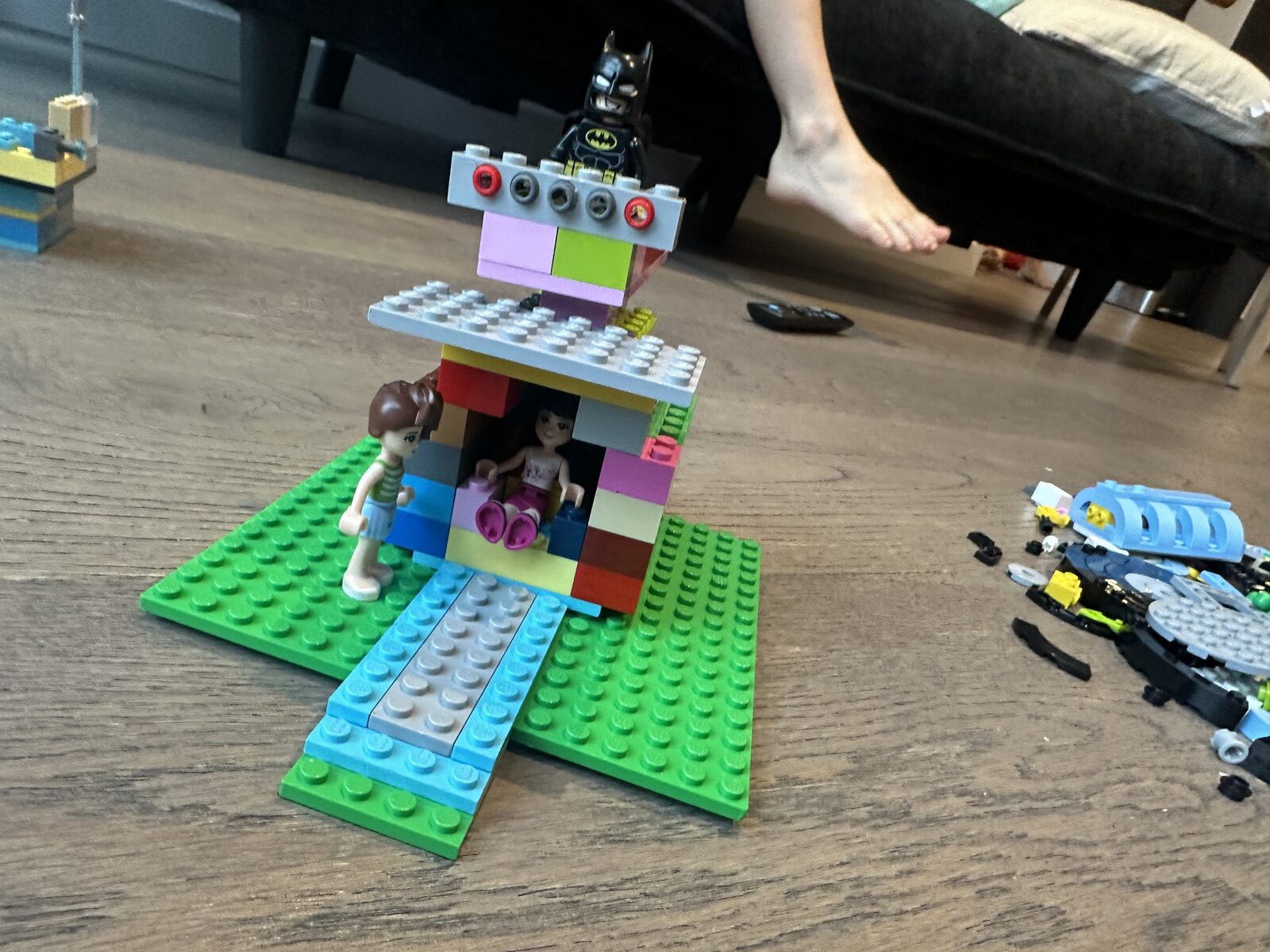
Our six year old son didn’t want to come this morning. He had filled his curiosity up with the Aboriginal art we saw earlier in the week, and he didn’t want to be dragged away from his Lego. He has found a new insatiable appetite for Lego since arriving in Melbourne, waking early each morning to turn on his audiobook and lose himself in the act of building, dismantling (because we have a limited amount with us), and building again. We debated whether to avoid the argument and separate off for different activities, but decided on balance that the better lesson was to bring him along. He couldn’t dodge the activity, but he could instead lead his experience, steer what he wanted to look at and go at his own pace. He swiftly decided that the children’s gallery, which we had mentioned to sweeten the deal, was too ‘babyish’ for him and instead headed in the direction of the contemporary art with Jimmy. He will not sit and study the art like my daughter, his age and temperament making it difficult to sit for long when he is so stimulated by his environment. Instead he toured all three floors of the gallery in the two hours that it took my daughter and me to see one. But my son’s approach is no less valuable to him.
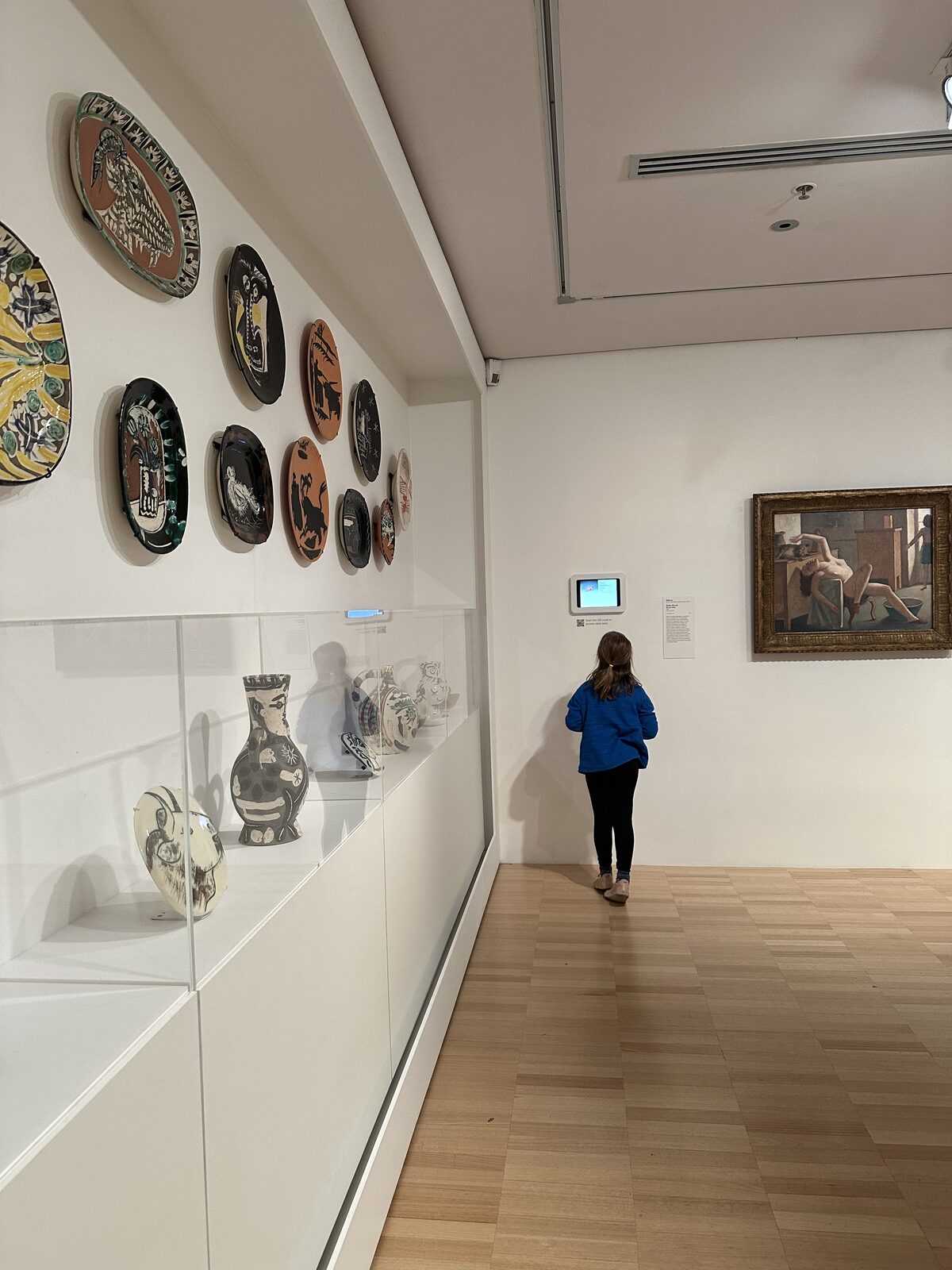
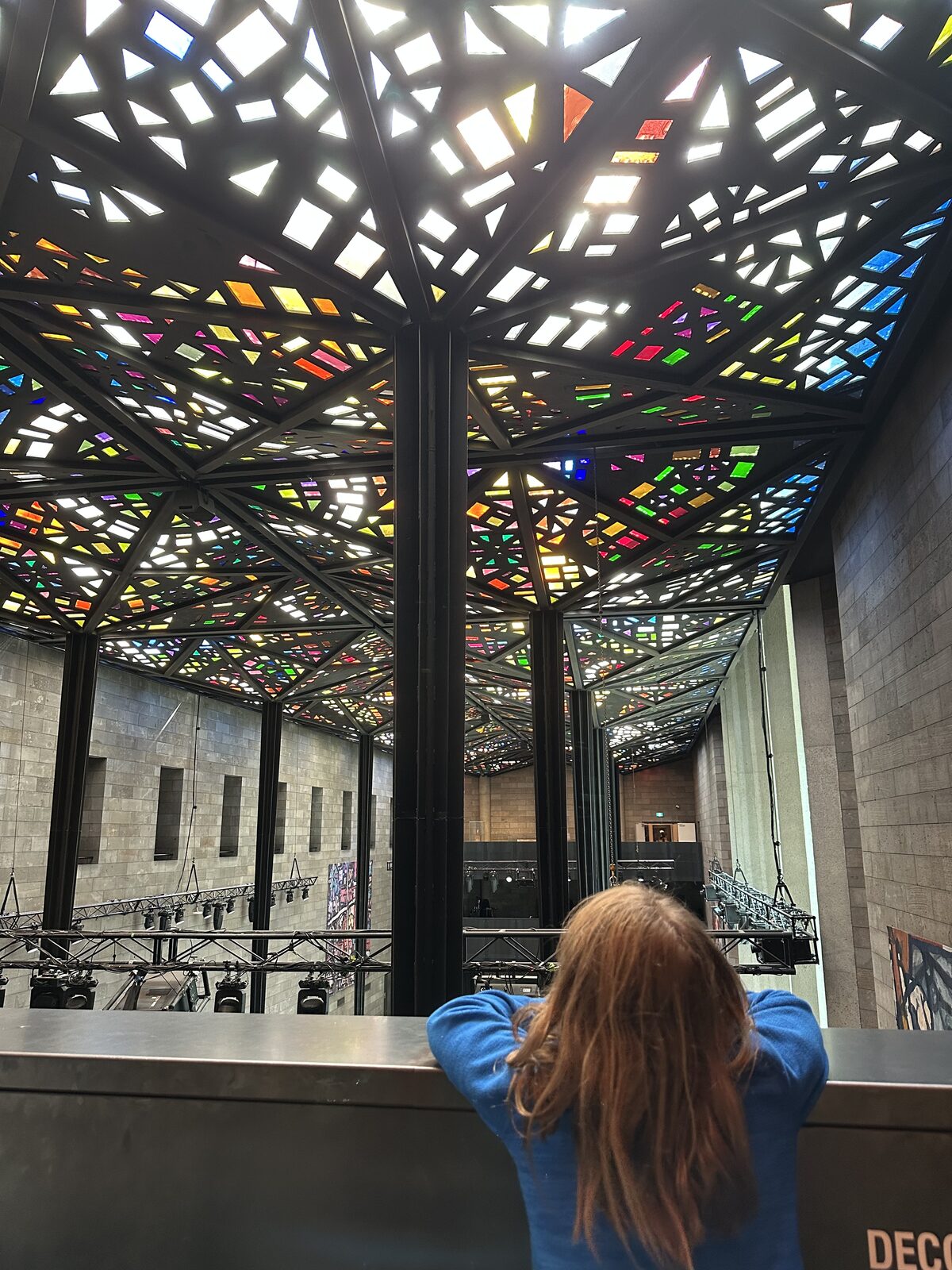
Taking the kids into these spaces not only provides rich experiences, but it also teaches them how to be out in the world. They smiled and responded to the security guard at the cloakroom, who was intrigued to find out where they were from. They read the detailed signs to work out how to navigate to where they wanted to go, rushing to find the Picasso painting that had been stolen off the wall and later found in the train station, in a demonstration aimed to gain more money for the arts. The kids were aware of the expectation in this space to keep calm and quiet to let others enjoy their experience, and although it is naturally difficult for my son to do this, he tried his best to respect it. My daughter didn’t hesitate in chatting to the man who asked her opinion of the dresses in the fashion room, explaining how she liked the blend of turquoise and purple on her favourite.
As my son came and found us standing in front of a bright red pair of lips declaring themselves as a sofa, he announced that this had been designed by Salvador Dali. He remembered the 3D installation from the surrealist’s museum in Figueres, which we had visited almost a year before on our camper van travels through Spain. The red-lipped sofa had been used to form a mouth, as part of an optical illusion of Mae West’s face, which could be seen when viewed by climbing up some stairs. Another neural connection, a thread from then until now, still very much alive for him.
Emma runs Go Sketch Club (opens in a new tab), home ed art club lessons online.
A letter on Sundays
A short letter from wherever we have landed: what we've been learning, what helped, and what I'm still working out.
If you would enjoy receiving a letter from me, I would love you to join me.